
 VocalsSound design
Free Talkbox Plugins 2026, And What They Leave Out
Yes, free talkbox plugins exist. Five that install today, what each one actually does, and the routing and feature gaps their download pages skip.
VocalsSound design
A talkbox plays a carrier through the shape of your mouth. What that means inside a plugin, and why you do not have to load a synth first.
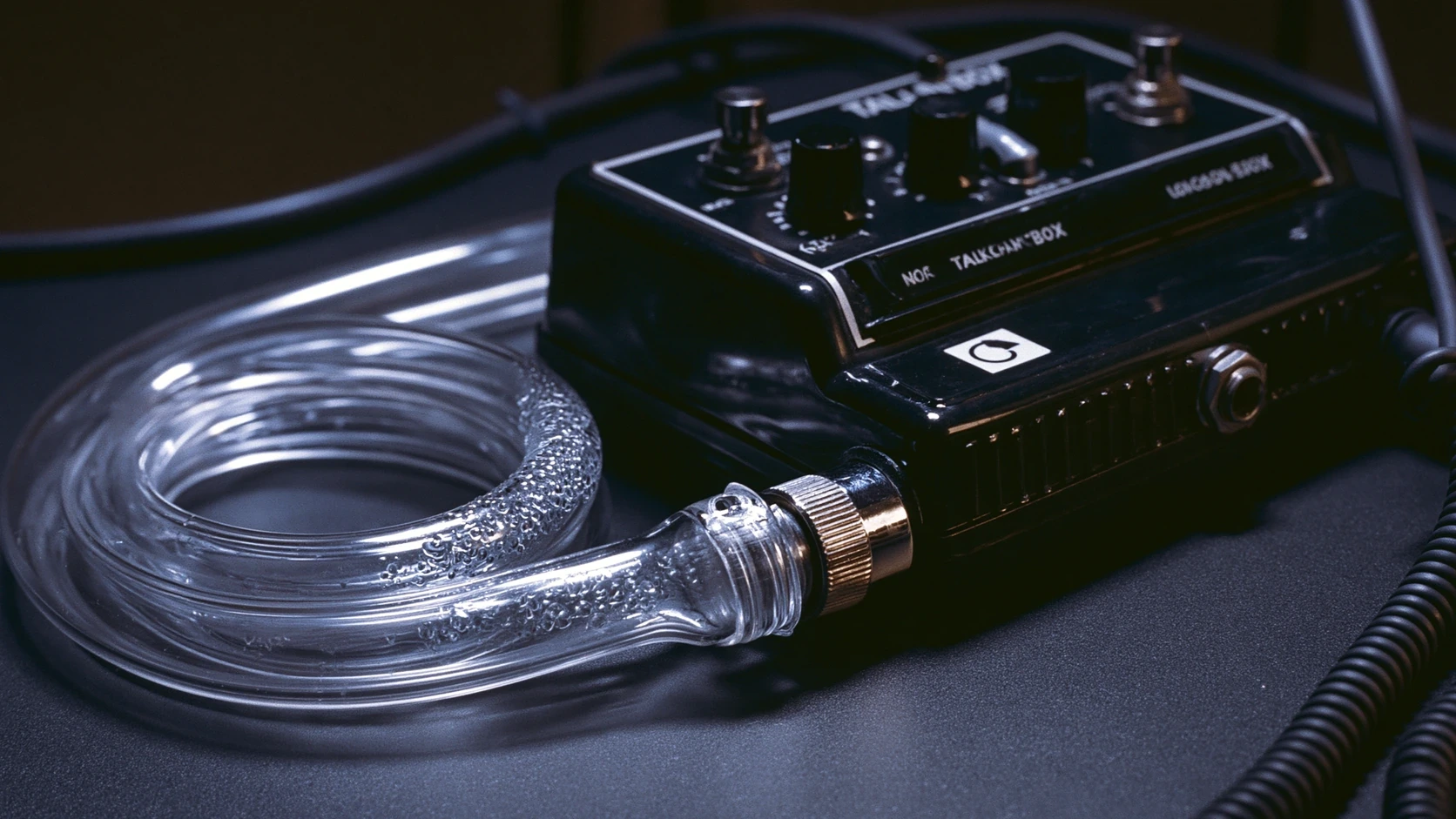
A talkbox does not process your voice. It plays a sound through your voice. A driver sends a musical tone up a plastic tube into your mouth, your tongue and jaw and lips shape it the same way they shape speech, and a microphone in front of your face records that tone wearing your vowels. Your vocal cords never have to be involved. The musical tone is called the carrier, and everything confusing about talkbox plugins comes down to one question: where does the carrier come from, and who has to supply it.
The carrier supplies the pitch and the harmonics, your mouth supplies the words. That split explains the classic failure. Feed a talkbox a sine wave and it mumbles, because a mouth can only filter energy it is given and a sine has energy in one place. A saw, a pulse or a detuned stack speaks clearly, because there is something in every band for the vowel shapes to move.
In hardware the path starts at the keyboard. In a plugin it depends on the design. The classic talkbox plugin is an instrument or a sidechain device, so the setup is load a synth, route or print it, then sing over it. PRISM PRO is an audio effect with the carrier built into it, so it goes on the track that already carries your voice and plays live while the transport runs. Nothing else gets loaded.
A talkbox line that drifts a semitone is worse than no talkbox line. PRISM PRO takes its pitch in a fixed order: MIDI if you send it, then the chord it hears on the sidechain, then the key and scale you set, then the voice on its own. With key and scale set, out of scale decisions measure zero against 12.1 percent with the lock off. When it has not heard enough to name a key it says so on screen and quantises nothing.
Both the tube and the model throw away cues that make speech legible, so you have to supply more of them than feels natural. Mouth the words harder than you would sing them. Then blend a little of the dry voice back, high passed so only the sibilance and the transients come through, and the S and the T return without breaking the illusion that the instrument is speaking.
A talkbox is a character stage rather than a corrective one, so the order around it matters: clean the source, then shape it, then place it. PRISM PRO reports 5 ms of latency from a 5 ms lookahead, and it carries a host bypass, so comparing it against the dry track is one control. Twelve factory presets ship with it, and a preset carries the sound rather than the key you are playing it in.
The difference a built in carrier makes is not tone, it is the number of decisions standing between an idea and hearing it. The hardware route is a tube, a microphone and a room. The classic plugin route is choosing an instrument, routing or printing it, and only then finding out whether the phrase works at all. With the carrier already inside, the first take happens while you are still deciding whether you want the sound, which is usually the moment that answers the question.
One naming note, because the search results confuse it constantly. PRISM PRO is a talkbox and not a vocoder, and the two are built on opposite mechanisms even though most of the records people file under one name were made with the other. The mechanics of both sit side by side in talkbox versus vocoder.

PRISM PRO carries its own carrier, follows the pitch of the voice it hears, and keeps the line inside your key. It runs as an audio effect on the vocal track, with a seven day trial that needs no card.
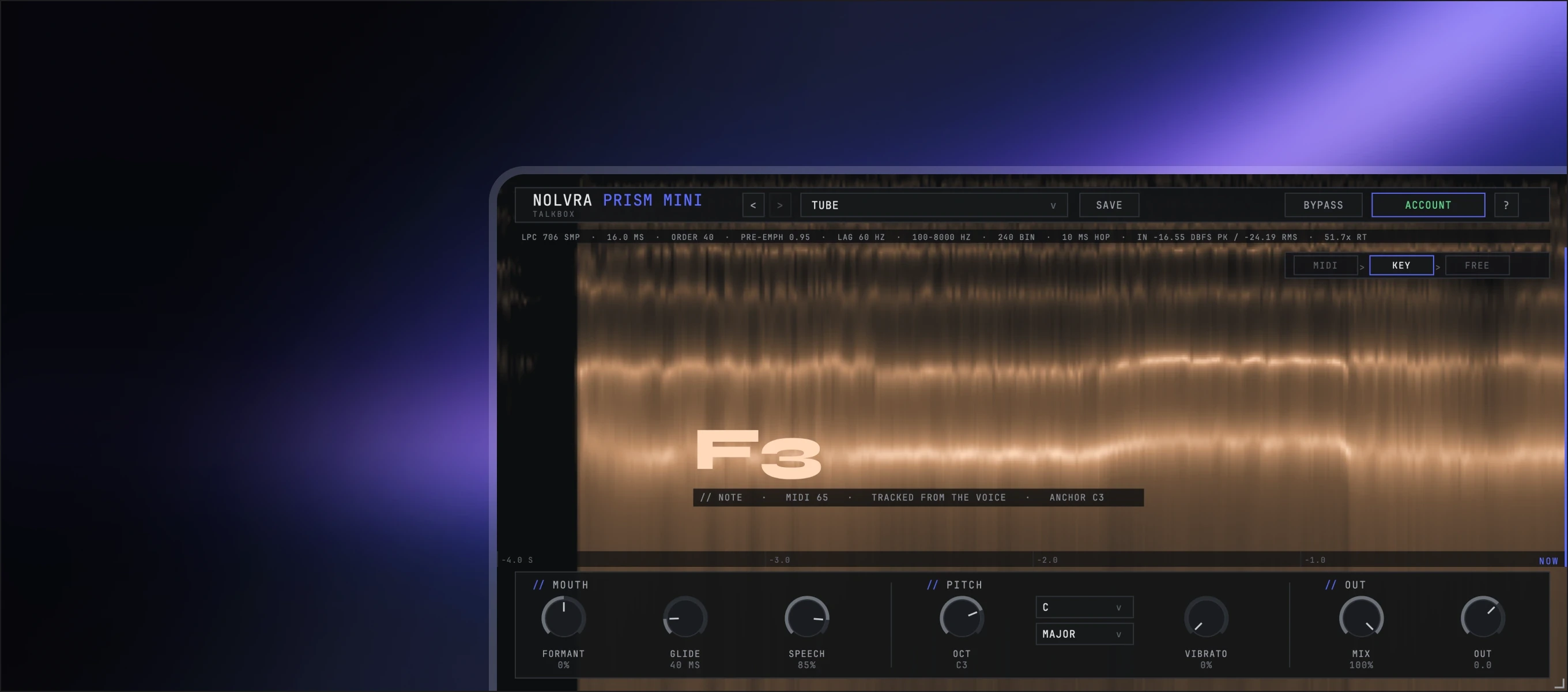
A talkbox with the carrier inside, free through the Nolvra Hub.
It depends on the plugin. The classic design is an instrument or a sidechain device, so the setup is load a synth, route or print it, then sing over it. A plugin with the carrier built in goes straight onto the track that already carries your voice and plays live while the transport runs, and nothing else gets loaded.
Something with energy in every band. The carrier supplies the pitch and the harmonics while your mouth supplies the words, and a mouth can only filter energy it is given. Feed a talkbox a sine and it mumbles, because a sine has energy in one place. A saw, a pulse or a detuned stack speaks clearly, because there is something in every band for the vowel shapes to move.
Two moves. Over articulate first: both the tube and the model throw away cues that make speech legible, so mouth the words harder than you would sing them. Then give the consonants back by blending a little of the dry voice, high passed so only the sibilance and the transients come through. The S and the T return without breaking the illusion that the instrument is speaking.
It is a character stage rather than a corrective one, so the order around it is clean the source, then shape it, then place it. Put the cleanup before it and the space after it. Latency matters here too: check what the plugin reports, and use the host bypass rather than a manual one so comparing it against the dry track stays a single control.
Guides
You may also like
VocalsSound designYes, free talkbox plugins exist. Five that install today, what each one actually does, and the routing and feature gaps their download pages skip.
 Sound designVocals
Both make an instrument talk. One uses your mouth as the filter, the other uses your voice as a control signal.